
"HB-M5 parts"
50000 article(s) found

A brief introduction to the flavor, taste and aroma characteristics of Colombian boutique coffee beans with sweet and sour fruit flavor
Colombian coffee is located in the Andes, where the mild climate, humid air and good rainfall make it very suitable for coffee growth. According to its geographical location, Colombian coffee is divided into three producing areas: northern, central and southern, in which there are six high-quality coffee producing areas in Colombia, Sierra Nevada,Santander, Cauca, Huila,Nari?o and Paisaje cu.

A brief introduction to the cultivation of Colombian boutique coffee beans mixed with sour and sweet fruits, geographical location, climate and altitude
People used to call him Juan? Uncle JUAN VALDEZ. Juan? Valdez is the representative image of Colombian coffee growers and a symbol of Colombian coffee, which distinguishes it from coffee from other countries of origin and is accepted by different markets. In the last 40 years, Colombian coffee growers have made great efforts to create what we see today.

Colombian Coffee Flavor Manor introduction to Lazmus Manor
The main varieties of Colombian coffee are small grains of coffee. Plants are small trees or large shrubs, 5-8 m tall, usually much branched at base; old branches gray-white, nodes dilated, young branches glabrous, compressed. Leaves thinly leathery, ovate-lanceolate or lanceolate, 6-14 cm long and 3.5-5 cm wide, tip long acuminate, acuminate part 10-15 mm long, base cuneate or slightly obtuse, rarely rounded, entire or

The characteristics of Columbia Huilan Coffee Grinding degree treatment Variety producing area Taste Manor
The main varieties of Colombian coffee are small grains of coffee. Plants are small trees or large shrubs, 5-8 m tall, usually much branched at base; old branches gray-white, nodes dilated, young branches glabrous, compressed. Leaves thinly leathery, ovate-lanceolate or lanceolate, 6-14 cm long and 3.5-5 cm wide, tip long acuminate, acuminate part 10-15 mm long, base cuneate or slightly obtuse, rarely rounded, entire or

A brief introduction to the low-key and elegant flavor and aroma characteristics of Colombian boutique coffee beans
Compared with other producing countries, Colombia is more concerned with developing products and promoting production. It is this, coupled with its superior geographical and climatic conditions, that makes Colombian coffee excellent in quality and delicious and famous all over the world. Roasted coffee beans will release sweet aroma and have the characteristics of sweet in acid and flat in bitterness. because of the suitable concentration, they are often used in advanced blending.

A brief introduction to the History and Culture of the Origin and Development of Colombian Fine Coffee beans with delicate Acid
Colombian coffee is located in the Andes, where the mild climate, humid air and good rainfall make it very suitable for coffee growth. According to its geographical location, Colombian coffee is divided into three producing areas: northern, central and southern, in which there are six high-quality coffee producing areas in Colombia, Sierra Nevada,Santander, Cauca, Huila,Nari?o and Paisaje cu.

A brief introduction to the description of the flavor, taste and aroma characteristics of fine Colombian coffee beans with delicate acidity
The flavor characteristics of Colombian super coffee: sweet in acid, low in bitterness, rich in nutrition, unique sour and mellow taste, the sour, bitter and sweet taste of Columbia super coffee match well. Unique fragrance, after drinking, the aroma fills the whole mouth. Exhale the aroma from the mouth again from the nose, the smell is very full. Maybe you think it's too bossy, because

A brief introduction to the history and culture of the origin and development of Colombian boutique coffee beans with caramel sweetness.
The history of Colombian coffee: it is said that in 1808 a priest brought coffee to Colombia for the first time from the French Antilles via Venezuela. Coffee drinkers know that Colombian coffee has a silky taste. Many people equate Colombian coffee with high quality and good taste. Since then, coffee trees have taken root in this country. It also became the one after Brazil.

A brief introduction to the History and Culture of the Origin and Development of Colombian Fine Coffee beans with Sweet and sour Fruit
Colombian coffee is located in the Andes, where the mild climate, humid air and good rainfall make it very suitable for coffee growth. According to its geographical location, Colombian coffee is divided into three producing areas: northern, central and southern, in which there are six high-quality coffee producing areas in Colombia, Sierra Nevada,Santander, Cauca, Huila,Nari?o and Paisaje cu.

Introduction to the Variety characteristics of Colombian Coffee Flavor description treatment
Colombian Coffee Flavor description treatment method Variety characteristics Colombian Pavilion official Meriscio Prada told Xinhua that the venue held a two-week coffee exhibition for visitors to taste Colombian coffee and introduce and promote Colombian coffee and coffee culture to tourists from China and all over the world. Participated in the preparatory work of the Columbia Pavilion

Flavor description of Starbucks Colombian Ramon Coffee beans introduction of varieties in taste producing areas
The flavor description of Starbucks Colombian Ramon coffee beans the varieties of Colombian coffee are mainly small-grain coffee. Plants are small trees or large shrubs, 5-8 m tall, usually much branched at base; old branches gray-white, nodes dilated, young branches glabrous, compressed. Leaves thinly leathery, ovate-lanceolate or lanceolate, 6-14 cm long, 3.5-5 cm wide, tip long acuminate

Colombian Coffee growing Environment Flavor and Taste introduce Fine Coffee
The main varieties of Colombian coffee are small grains of coffee. Plants are small trees or large shrubs, 5-8 m tall, usually much branched at base; old branches gray-white, nodes dilated, young branches glabrous, compressed. Leaves thinly leathery, ovate-lanceolate or lanceolate, 6-14 cm long and 3.5-5 cm wide, tip long acuminate, acuminate part 10-15 mm long, base cuneate or slightly obtuse, rarely rounded, entire or

Espresso (espresso) part of the operating points illustrated espresso tasting
Espresso operation is the foundation of barista, for the huge Italian coffee system, Espresso production is the core element, a perfect cup of Espresso is the pursuit of every barista. 1. The most important thing about ground coffee is fresh, freshly roasted whole beans, freshly ground and made, which is the basic requirement. A quality coffee shop, a quality barista, this is the most

Columbia Hope Manor Coffee Grinding characteristics Variety Flavor description Taste introduction
The main varieties of Colombian coffee are small grains of coffee. Plants are small trees or large shrubs, 5-8 m tall, usually much branched at base; old branches gray-white, nodes dilated, young branches glabrous, compressed. Leaves thinly leathery, ovate-lanceolate or lanceolate, 6-14 cm long and 3.5-5 cm wide, tip long acuminate, acuminate part 10-15 mm long, base cuneate or slightly obtuse, rarely rounded, entire or

Introduction to the ratio standard of coffee extraction rate calculation powder and ice cubes
Coffee extraction rate calculation now starts the calculation part: suppose my powder quantity is 19 grams, the weight of espresso is 37.8 grams, the concentration is 10.8%, the extraction rate is 10.8%, the extraction rate is 21.5%, the final result is 10.8%, the extraction rate is 21.5%, within the golden cup range, it does not mean that this cup of coffee is good, this can only give us a guide, at least this cup.

The taste of Colombian coffee introduces the characteristics of Colombian boutique.
The main varieties of Colombian coffee are small grains of coffee. Plants are small trees or large shrubs, 5-8 m tall, usually much branched at base; old branches gray-white, nodes dilated, young branches glabrous, compressed. Leaves thinly leathery, ovate-lanceolate or lanceolate, 6-14 cm long and 3.5-5 cm wide, tip long acuminate, acuminate part 10-15 mm long, base cuneate or slightly obtuse, rarely rounded, entire or

Columbia Coffee Manor with Sweet Flavor characteristics of Fine Coffee beans
The main varieties of Colombian coffee are small grains of coffee. Plants are small trees or large shrubs, 5-8 m tall, usually much branched at base; old branches gray-white, nodes dilated, young branches glabrous, compressed. Leaves thinly leathery, ovate-lanceolate or lanceolate, 6-14 cm long and 3.5-5 cm wide, tip long acuminate, acuminate part 10-15 mm long, base cuneate or slightly obtuse, rarely rounded, entire or

Introduction of Colombian coffee bean flavor description grinding scale variety production area treatment manor
Colombian Coffee Bean Flavor description Grinding scale Variety production area treatment manor introduction Colombian coffee is mainly small-grain coffee. Plants are small trees or large shrubs, 5-8 m tall, usually much branched at base; old branches gray-white, nodes dilated, young branches glabrous, compressed. Leaves thinly leathery, ovate-lanceolate or lanceolate, 6-14 cm long, 3.5-5 cm wide, tip long acuminate

The various parts of the coffee plant decompose the shallow root crop of coffee.
Coffee is a shallow root crop, and the plants propagated with seeds have conical roots. Root system refers to the general name of root. The root morphological distribution and depth of shade varieties / soil conditions and agricultural technical measures are different. From the point of view of varieties, the roots of small / medium grain species are shallower, while those of large grain species are deeper. Under normal circumstances, there is a thick and short taproot and many well-developed lateral roots. Yunnan small-grain coffee has a 4-year-old fruit.
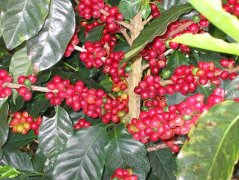
Colombian coffee bean species morphology Central and South American flavor
Species Morphology Colombian Coffee Plant Morphology Colombian coffee is mainly small grain coffee. Plants are small trees or large shrubs, 5-8 m tall, usually much branched at base; old branches gray-white, nodes dilated, young branches glabrous, compressed. Leaves thinly leathery, ovate-lanceolate or lanceolate, 6-14 cm long and 3.5-5 cm wide, tip long acuminate, acuminate 10-15 mm long, basal